
Understanding Hair Follicle Miniaturization in Alopecia
Androgenetic Alopecia (AGA) is the most prevalent form of progressive hair thinning in both men and women. The pathophysiology centers around the enzymatic conversion of systemic testosterone to Dihydrotestosterone (DHT) by 5-alpha reductase type II in genetically predisposed scalp follicles.
DHT binding to androgen receptors within dermal papilla cells shortens the anagen (active growth) phase while prolonging the telogen (quiescent shedding) phase. Concurrently, perifollicular micro-inflammation and progressive collagenous fibrosis constrict local microcapillaries. Over multiple hair cycles, robust terminal hairs progressively miniaturize into faint, non-pigmented vellus hairs until the follicle becomes dormant.
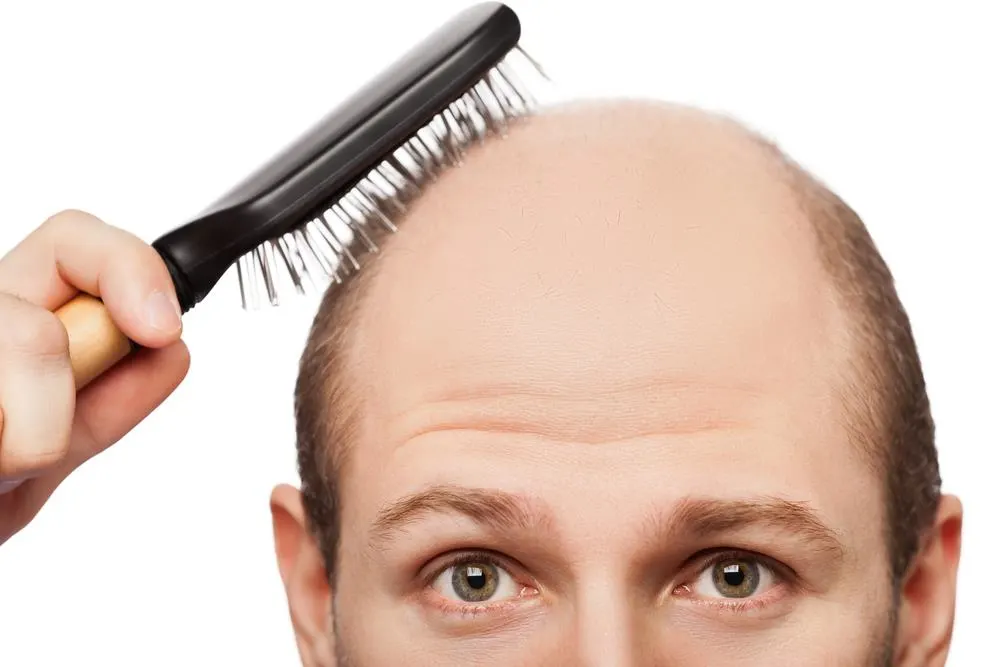 Figure: Paracrine signaling of adipose-derived stem cells restoring vascular micro-environment in miniaturized scalp follicles.
Mechanism: How ADSCs & Exosomes Reactivate Hair Growth
Adipose tissue is the richest adult source of Mesenchymal Stem Cells (MSCs), yielding up to 500 times more regenerative progenitor cells per gram than bone marrow aspirate. The therapeutic power resides in the paracrine secretome:
Wnt/β-Catenin Pathway Activation
Bioactive growth factors in ADSCs and exosomes stimulate the crucial Wnt/β-catenin and Akt signaling cascades in dermal papilla cells, which directly initiates transitions from the dormant telogen phase back into the active proliferative anagen phase.
Perifollicular Neoangiogenesis (VEGF & bFGF)
ADSCs vigorously secrete Vascular Endothelial Growth Factor (VEGF) and basic Fibroblast Growth Factor (bFGF), expanding the microcapillary plexus surrounding the follicle bulb and restoring essential nutritional and oxygen supply.
Suppression of Perifollicular Micro-Inflammation
Anti-inflammatory cytokines (IL-10, TGF-β1) downregulate inflammatory infiltrate (macrophages, mast cells) and matrix metalloproteinases that drive fibrotic strangulation of the hair follicle sheath.
Exosomal microRNA Follicle Reprogramming
Exosomes contain regulatory microRNAs (such as miR-218-5p and miR-125b) that penetrate follicle cell membranes, directly downregulating apoptotic proteins and promoting prolonged follicular survival.
The Clinical Protocol: Step-by-Step Procedure
The entire procedure is completed as an outpatient clinical appointment under strict sterile surgical standards:
1. Micro-Lipoharvesting
Under gentle local tumescent anesthesia, 40–60 mL of subcutaneous adipose tissue is harvested from the lower abdomen or flanks via a micro-cannula (virtually painless).
2. Closed cGMP Processing
The lipoaspirate is processed in a closed centrifuge and micro-filtration system to isolate the concentrated Stromal Vascular Fraction (SVF) rich in ADSCs, pericytes, and signaling vesicles.
3. Scalp Micro-Mesotherapy
Using 32G micro-needles and computerized mesotherapy guns, the concentrated cellular suspension is evenly micro-injected at 1.5–2.5 mm depth directly across the thinning scalp zone.
Clinical Indications & Patient Selection Criteria
Accurate clinical staging via high-magnification digital trichoscopy determines whether a patient is an ideal candidate for cellular therapy:
✓ Prime Candidates
- Male Pattern Hair Loss: Norwood Stages 2 to 5 with active miniaturization
- Female Pattern Hair Loss: Ludwig Stages 1 to 2 with preserved follicle count
- Diffuse thinning post-telogen effluvium or persistent stress alopecia
- Hair transplant patients seeking biological graft pre-conditioning or donor-site healing
- Patients seeking to avoid sexual side-effects associated with oral 5-alpha reductase inhibitors
✗ Exclusion Factors
- Completely smooth, fibrosed bald scalp (Norwood Stage 7 with zero active follicle ostia)
- Cicatricial (scarring) alopecias in active flare-up (Lichen Planopilaris, Frontal Fibrosing Alopecia)
- Active scalp infections (folliculitis, fungal tinea capitis)
- Uncorrected severe nutritional deficiencies (ferritin < 15 ng/mL, severe zinc/B12 deficiency)
- Severe systemic coagulopathies or bleeding disorders
Cost Breakdown: India vs International Centers
Medical travelers achieve substantial financial savings on cellular hair restoration in India while receiving treatments from accredited dermatologists and plastic surgeons:
| Destination / Country | Average Treatment Package | Methodology Used | Facility Level |
|---|---|---|---|
| India (Our Partner Centers) | $3,500 – $6,500 USD | Autologous SVF + ADSC Exosomes | JCI / NABH Multi-Specialty Hospital |
| United States | $12,000 – $22,000 USD | Adipose SVF / Exosome Injections | Private Aesthetic Clinic |
| United Kingdom / EU | $10,000 – $18,000 USD | Micro-graft Mechanical Suspension | Private Harley Street Clinic |
| Turkey / Mexico | $6,000 – $11,000 USD | Variable Processing Quality | Regional Day Surgery Center |
What Is Included in the India Hair Restoration Package?
Pre-procedure digital dermoscopy & trichoscan mapping, minor liposuction harvest by qualified plastic surgeon, closed-circuit cGMP SVF/ADSC processing, high-density scalp micro-infusion across affected scalp zones, complementary concentrated PRP activation, post-procedure anti-inflammatory light therapy (LLLT), airport transfers, and 12-month digital trichological follow-up.
Peer-Reviewed Scientific Literature
Our clinical perspective is validated by peer-reviewed dermatology and regenerative medicine journals:
- Gentile, P. et al. (2017): "Stem cells from human hair follicles: First evidence of hair regrowth in androgenetic alopecia." Stem Cells Translational Medicine, 6(11): 1965-1977.
- Tak, Y. J. et al. (2020): "A randomized, double-blind, vehicle-controlled clinical study of hair regeneration using adipose-derived stem cell constituent extract." Stem Cells Translational Medicine, 9(8): 839-849.
- Fukuoka, H., & Suga, H. (2015): "Hair regeneration therapy using adipose-derived stem cell-conditioned medium: follow-up with trichograms." Eplasty, 15: e10.
- Anderi, R. et al. (2018): "Stem Cell and Exosome Therapy in Androgenetic Alopecia: A Systematic Review." Journal of Cosmetic Dermatology, 17(5): 688-695.