Pathophysiology of Cerebellar & Spinocerebellar Ataxia
Ataxia encompasses a heterogeneous group of progressive neurodegenerative conditions marked by the loss of coordination, fine motor control, and equilibrium. The disease primary locus resides in the cerebellum, deep cerebellar nuclei (dentate nucleus), brainstem, and ascending/descending spinocerebellar tracts.
In hereditary forms such as Spinocerebellar Ataxia (SCA1, SCA2, SCA3, SCA6) and Friedreich's Ataxia (FRDA), genetic mutations (e.g., CAG trinucleotide repeat expansions or GAA repeats in the frataxin gene) trigger toxic protein aggregation, mitochondrial respiratory chain failure, and relentless apoptosis of cerebellar Purkinje cells. As Purkinje inhibitory output to deep cerebellar nuclei deteriorates, motor error correction fails, producing debilitating kinetic and postural disturbances.
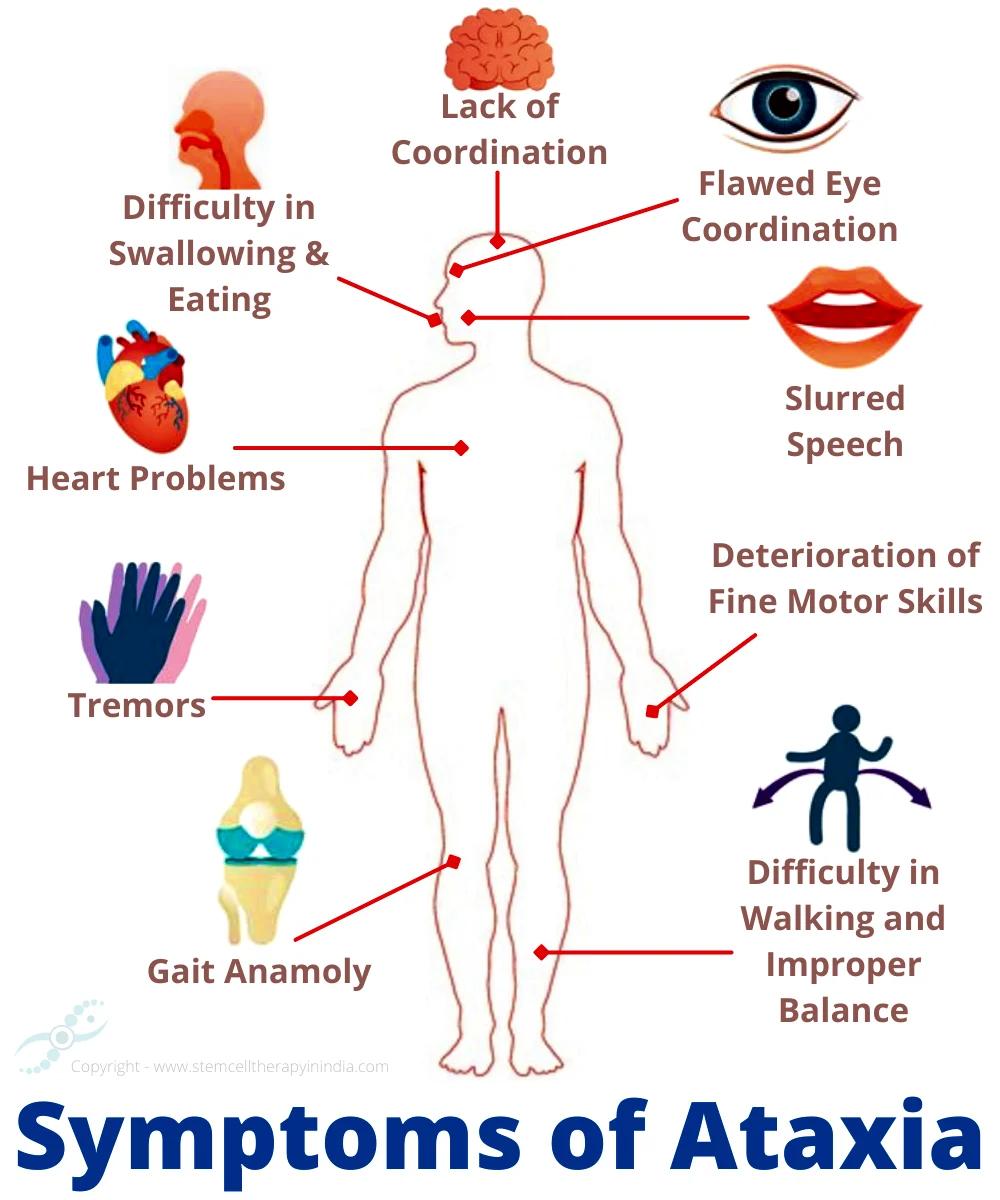 Figure: Cerebellar structural degeneration and restorative mechanisms of cellular therapy.
Clinical Manifestations & Functional Impact
Ataxia manifests through classic signs reflecting cerebellar and vestibular system disruption, systematically evaluated using the SARA (Scale for Assessment and Rating of Ataxia) score:
Motor & Ambulatory Features
- Wide-based, unsteady, staggering gait (truncal ataxia)
- Intention tremors and dysmetria (overshooting targets)
- Dysdiadochokinesia (inability to execute rapid alternating movements)
- Frequent unprovoked falls and postural swaying (Romberg sign)
- Loss of fine finger dexterity (buttoning shirts, handwriting micro/macrografia)
Bulbar & Oculomotor Signs
- Scanning, explosive, or slurred cerebellar dysarthria
- Dysphagia (choking on liquids, prolonged swallow transit times)
- Gaze-evoked nystagmus and jerky saccadic eye tracking
- Diplopia (double vision) and oscillopsia
- Chronic physical exhaustion due to high motor compensation effort
How Mesenchymal Stem Cells Target Ataxia Pathology
Mesenchymal Stem Cells (MSCs) deliver decisive neuro-protective, anti-apoptotic, and secretome-mediated benefits directly to the suffering cerebellar micro-environment:
Purkinje Cell Rescue via Neurotrophin Secretion
MSCs produce abundant concentrations of Neurotrophin-3 (NT-3), Brain-Derived Neurotrophic Factor (BDNF), and Glial Cell Line-Derived Neurotrophic Factor (GDNF), which have been demonstrated in pre-clinical and clinical models to arrest Purkinje cell dendritic shrinkage and apoptotic attrition.
Downregulation of Cerebellar Microglial Inflammation
Chronic microglial activation in the cerebellar cortex accelerates neuronal injury. MSC secretome shifts the local cytokine profile away from harmful mediators (TNF-α, IL-6) toward anti-inflammatory molecules (IL-10, TGF-β1), curbing destructive reactive astrogliosis.
Synaptogenesis & Climbing-Parallel Fiber Synaptic Repair
MSC-released extracellular vesicles stimulate synaptic protein expression (synaptophysin, PSD-95) along remaining cerebellar climbing and parallel fiber synapses, helping restore coordinated timing pulses necessary for smooth motor control.
Treatment Protocol & Administration Routes
Our partner JCI and NABH accredited neuroscience centers in New Delhi, Mumbai, and Bangalore implement safe, dual-route protocols:
| Administration Route | Clinical Rationale | Procedure Details |
|---|---|---|
| Intrathecal (CSF) Infusion | Directly introduces high concentrations of viable MSCs into the cerebrospinal fluid, enabling rostral flow to bathe the posterior fossa, cerebellum, and brainstem. | Conducted via standard lumbar puncture under local anesthesia by an experienced neuro-anesthesiologist with strict sterile precautions. |
| Intravenous (IV) Systemic Infusion | Provides widespread immunomodulation, reduces systemic oxidative stress, and fosters neurovascular endothelial stabilization. | Delivered as a slow IV drip over 60–90 minutes with continuous vital signs, ECG, and SpO2 telemetry monitoring. |
| Vestibular & Kinetic Physiotherapy | Immediately stimulates sensory-motor neuroplasticity, reinforcing coordination pathways nourished by the fresh stem cell secretome. | Daily 90-minute customized balance board, Frenkel coordination exercises, and gait retraining supervised by specialized neuro-physiotherapists. |
Patient Candidacy & Selection Criteria
To ensure procedural safety and therapeutic efficacy, candidate records undergo thorough evaluation:
✓ Potential Candidates
- Clinically or genetically verified Spinocerebellar Ataxia (SCA1, SCA2, SCA3, SCA6, etc.)
- Diagnosis of Friedreich's Ataxia or idiopathic cerebellar atrophy with visible MRI changes
- SARA score 5 to 30 (patient is ambulatory unassisted or with walker/assistance)
- Adequate pulmonary and swallowing function without active aspiration episodes
✗ Exclusion Factors
- Complete vegetative or bedridden state with severe recurrent aspiration pneumonia
- Severe uncorrected bleeding disorders or current therapeutic anticoagulation
- Active intracranial tumors or active systemic malignant neoplasms
- Severe uncontrolled cardiopulmonary decompensation
Cost Breakdown: India vs International Centers
Medical travel to India provides significant economic savings without compromising on sterile cleanroom standards or clinical rigor:
| Country / Destination | Average Package Cost | Typical Waiting Period | Hospital Accreditation |
|---|---|---|---|
| India (Our Partner Centers) | $4,500 – $7,500 USD | 1 – 2 Weeks | JCI / NABH Accredited |
| United States | $26,000 – $48,000 USD | 3 – 6 Months | Clinical Trial Gated |
| United Kingdom / EU | $22,000 – $42,000 USD | 2 – 5 Months | Private Specialty Only |
| Panama / Mexico | $19,000 – $36,000 USD | 2 – 4 Weeks | Variable Regional |
What Is Included in the India Ataxia Treatment Package?
Hospital room accommodation (private room with companion facilities), cell harvesting and cGMP cleanroom processing, pre-treatment neuro-functional and MRI reviews, dual intrathecal and IV cell infusions, intensive daily cerebellar physiotherapy sessions, airport chauffeur pickup/drop-off, and dedicated multi-lingual medical coordination.
Peer-Reviewed Scientific Literature
Our clinical perspective is validated by published clinical trials and international peer-reviewed journals:
- Tsai, Y. A. et al. (2017): "Safety and Efficacy of Mesenchymal Stem Cells in Spinocerebellar Ataxia: A Phase I/IIa Clinical Trial." Cell Transplantation, 26(10): 1658-1667.
- Dong, H. et al. (2018): "Clinical observation of umbilical cord mesenchymal stem cell transplantation in the treatment of spinocerebellar ataxia." Journal of Clinical Neurology, 31(5): 341-344.
- Jones, J. et al. (2015): "Mesenchymal stem cells and cerebellar ataxia: Therapeutic possibilities and clinical challenges." Cerebellum, 14(3): 364-375.